
Wildfire Cleanup and Recovery for Large Properties
If fire went through your property, you're likely looking at standing dead timber, roads you can't trust, and ground that sheds water differently than it did a year ago. We handle that work at acreage scale: ranch, resort, woodlot and private forest land across the Cariboo-Chilcotin.
Here's what recovery involves, and what order to do it in. When you want to talk: 250-329-7356. We answer within one business day.
Managing forested land that hasn't burned? Our wildfire risk reduction and fire recovery page covers fuel management, selective thinning and fuel breaks.
wildfire risk reduction and fire recoveryWhat to do first after a fire
Safety first, then paperwork. Stay out from under standing burned timber; trees that look solid drop limbs and fall without much warning, especially in wind. Photograph everything before anything moves: buildings, timber, roads, fences. Your insurance broker needs that record and so does anyone helping you plan.
Then get the property assessed. A walk-through tells you which hazards need handling now, whether salvage is worth chasing while the wood still has value, and what can wait a season. Where it gets expensive is waiting — salvage decided too late, erosion left till after the melt, a road you needed that never got fixed.
Standing dead timber and danger trees
A burned tree is a different animal than a green one. Fire cooks the roots below grade and weakens the stem, and the tree fails unpredictably, sometimes years after the burn. Any standing dead timber within reach of buildings, driveways, fence lines or work areas is a hazard, and it gets worse every year it stands.
We take danger trees down with machines where the ground allows it: guarded equipment working from safe positions, timber down, processed and moved in one pass. On a big property the sensible order is corridors first. Get the access routes and the ground around structures safe, then work outward.
Is the burnt timber worth salvaging?
Sometimes — but the window doesn't stay open long. It comes down to species, how hard the wood burned, volume, and haul distance to a buyer. Fire-killed timber loses value standing: stain and checking move in, and every season narrows what a mill will take. If salvage is going to happen, decide early.
We run the recovery side of a salvage operation: roads log trucks can actually use, decking and load-out areas, danger trees handled, cleanup and rehabilitation behind the harvest — and where salvage pays, we coordinate licensed harvesting under the same job. We'll tell you plainly whether it looks worth pursuing on your ground. There are no dollar figures on this page on purpose: timber markets move, and anyone naming a value without seeing your wood is guessing.
Access and road repair
Nothing happens until trucks and machines can move safely on the property. Fire takes out culverts, burns wooden structures, loosens cut slopes and fills ditches, and the first big storm finds every weak spot.
We rebuild access at property scale — washouts, culverts, ditching, grades, surfacing — with whatever iron the damage calls for. If salvage is in your plan, roads come first, because haul access decides what the wood is worth.
Fence lines: burnt fence pulled out and hauled off, new fence built where you need it.
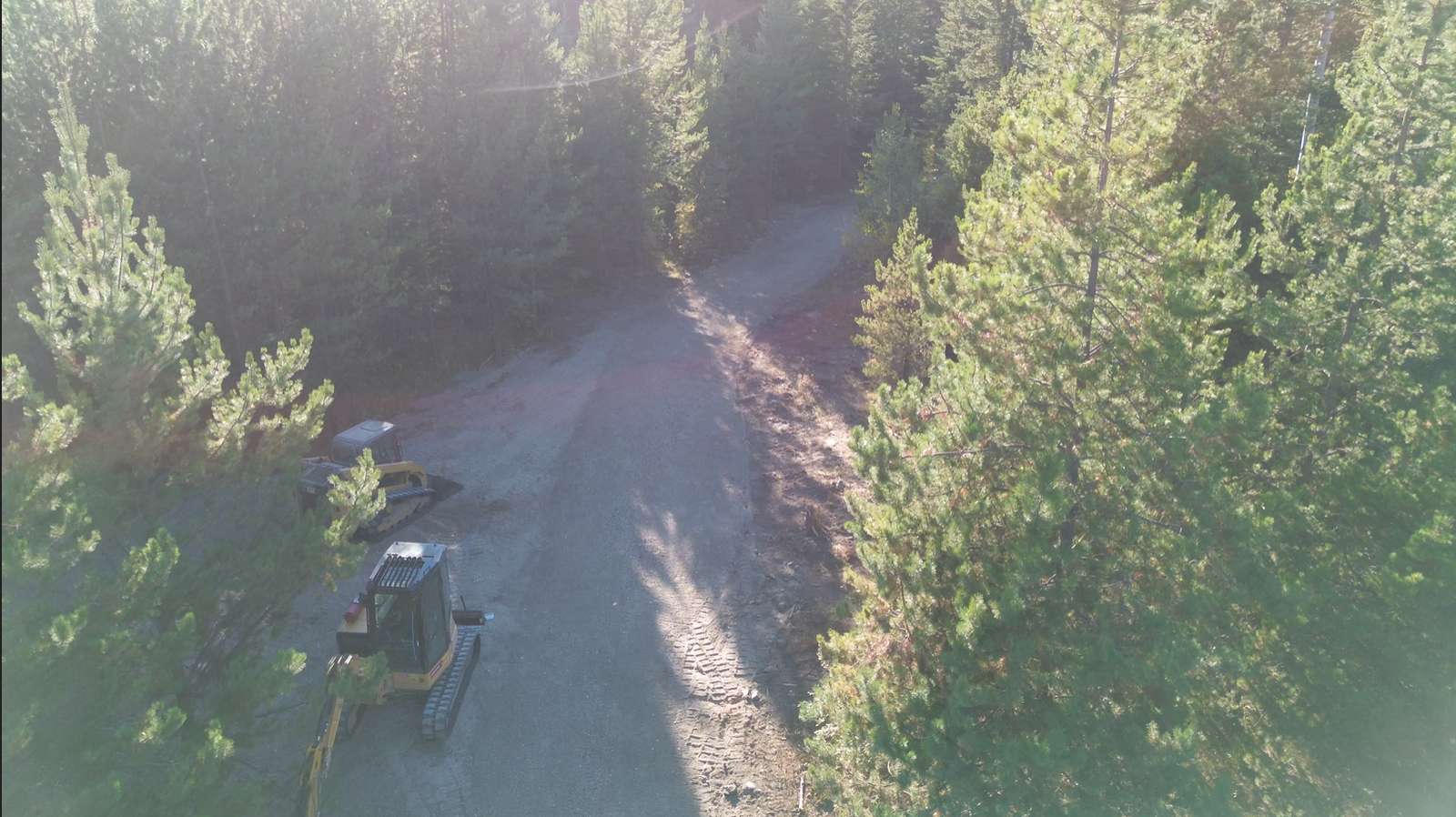
Erosion and drainage on burned ground
Burned ground sheds water differently. The canopy that used to catch rain is gone, the duff that soaked it up is ash, and a hot burn can leave soil that repels water for a while instead of absorbing it. Runoff shows up faster and harder. It cuts gullies, plugs culverts, and moves soil you'd rather keep.
The fix is drainage work done before the water arrives: ditching, water bars, culverts sized for the new conditions, sediment control, recontouring where runoff concentrates. The deadline that matters is spring melt.
Debris: burn, process, or recover
A burned property carries a staggering amount of dead material, standing and down. There are three ways to deal with it. Pile and burn is cheapest where season and venting rules allow it. Processing on site keeps the smoke down and puts material back into the ground. Recovering fibre means hauling it to a user instead, which starts making sense when volumes and access line up, and funding programs for fibre utilization exist in this region.
Most properties use a mix, and the mix is a site-by-site call. That's most of what the assessment is for.
What a site assessment covers
We come out, walk the property with you, and look at the hazards, the access, the water and the timber, plus whatever you want the land to become. You get a written scope and estimate, phased so the urgent work is separated from what can wait. Then it's your call.
Enquiries get answered within one business day.
Questions landowners ask after a fire
What do I do with my land after a wildfire?
Make it safe, document it, then work in order: danger trees and access first, erosion control before the melt, salvage decisions early while the wood has value, and the rest of the cleanup phased as budget allows. An assessment puts a sequence and numbers to that list for your property.
Is burnt timber worth salvaging?
Sometimes. Species, burn severity, volume and haul distance decide it, and the answer degrades with time. On some properties salvage covers a real share of the cleanup cost. On others it isn't worth the roads you'd have to build to get the wood out. The earlier you decide, the more options you've got.
How long do I have to salvage fire-killed timber?
Shorter than most owners expect. Stain, checking and insects start working on standing dead timber from the first warm season after the burn, and buyers discount as it degrades. How long you've got depends on the species and the summer. Don't sit on it — every month the wood stands, you lose options.
Who is responsible for danger trees on private property?
On private land, hazard trees are generally the owner's responsibility, including where they threaten a neighbour's side of the fence or a road. After a fire that responsibility grows, because burned trees keep failing for years. Start with the trees that threaten access routes and buildings.
Does insurance cover wildfire cleanup on acreage?
That depends entirely on your policy. Rural policies often cover structures and the debris right around them; standing timber across the property usually isn't covered. Call your broker early, photograph everything before cleanup starts, and keep records. We provide the documentation and scoping an adjuster asks for.
How much does it cost to clear burned trees?
It depends on stem counts, terrain, access, what happens to the material, and how much of the property needs work, which is why we don't publish per-acre pricing. What you get from us is a written estimate after we walk the ground, phased so you can see what's urgent and what can wait.
Will burned trees fall on their own?
Yes — and you can't predict when. Roots burn out underground, stems dry and crack, and wind finishes the job. The hazard doesn't end when the fire does. Standing dead timber keeps failing for years.
What happens to soil after a wildfire?
Fire burns off the organic layer that absorbs water and holds soil together, and a hot burn can leave soil that repels water for the first while. Burned ground erodes easier and sheds rain faster, and the first year is the one that counts. Drainage and erosion work done before heavy rain and melt holds the land together while vegetation comes back.
Talk to us about your property
Tell us roughly where the property is, how many acres burned, and what worries you most.
- 1.Tell us about the ground — five minutes.
- 2.We walk it with you and talk through what's urgent, what can wait, and rough numbers.
- 3.You get a written estimate with a defined scope. If we're not the right fit, we'll say so and point you at who is.
Call or text 250-329-7356 to speak directly with the owner. Or send the project through the form and we'll respond within one business day.
Not sure what you need? Call anyway — five minutes of straight answers costs nothing, and if it isn't machine work, we'll tell you who to call instead.
WorkSafeBC registered · $5M CGL · SECOR-compliant SMS · S-100/S-185 crews