
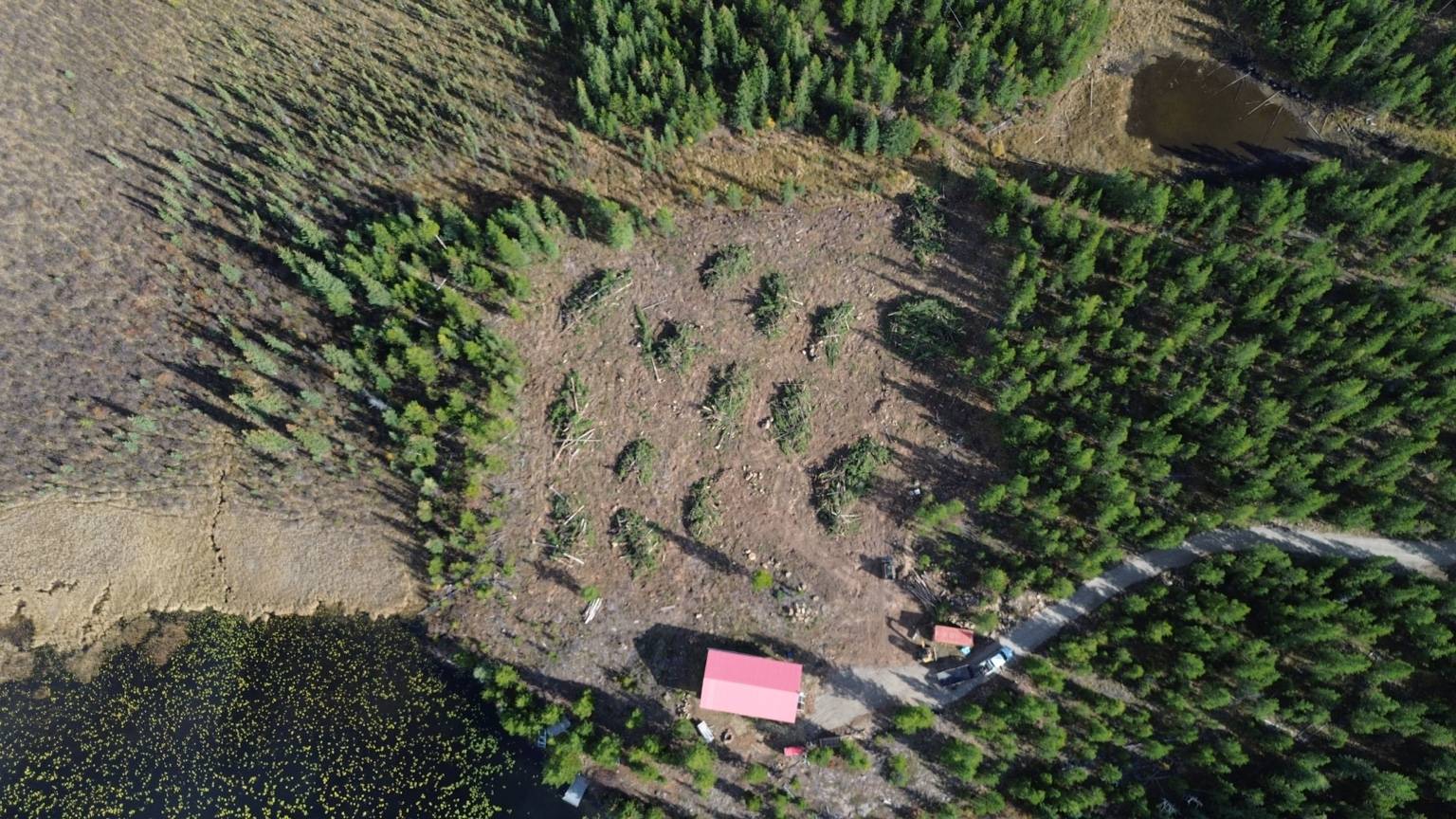
Commercial Land Clearing
Right-of-way, subdivision, and development clearing — full grub-and-strip to mineral soil, or selective clearing to your drawings. Your spec, your timeline, your call.
How We Clear Land
Every clearing job starts with a walkthrough. We look at what's coming down, what's staying, where the access is, and where the material goes. Some jobs are full grub-and-strip — take everything down to mineral soil. Others are selective, working around mature timber, creek setbacks, or features the owner wants to keep.
We handle the full scope: tree falling, stump removal, root grubbing, slash management, and site cleanup. Slash gets piled for burning or loaded out depending on the site and the regulations. Stumps come out, and we sort, pile, and stage material so the site is ready for the next phase.
Our forestry iron runs full guarding and fire suppression — purpose-specced for forestry ground, not a construction machine with a guard bolted on.
We leave the site the way the next trade needs it. If it's a building pad, we clear to grade. If it's a right-of-way, we clear to the corridor width and stage material for pickup. If it's a subdivision, we clear to the lot lines and protect what's on the other side of the tape.
Clearing tied to wildfire risk? See our wildfire risk reduction and fire recovery work.
Where We Do This
Development Site Prep
Clear the footprint for commercial buildings, shops, and institutional facilities. We take it down to grade and hand the GC a clean pad.
Right-of-Way & Corridor Clearing
Utility corridors, pipeline ROW, and road alignments cleared to spec — merchantable timber decked, slash processed, corridor left ready for construction.
Subdivision Development
Lot-by-lot clearing for rural subdivisions. We work to lot lines and protect retained timber and setback zones.
Wildland-Urban Interface
Clearing the buffer zone between structures and forest. Reduces fire risk and creates defensible space for property protection.
Access Corridor Clearing
Cut a path for a new access road, utility corridor, or resource road. We clear the right-of-way and stage material off-site.
Winter is clearing season
The best time to clear ground in this country is when it's frozen. Hard ground carries the machines onto places you can't touch in summer — wet meadows, soft access, low ground that ruts up the moment it thaws. Winter work also stays clear of the spring nesting window, burn piles go up clean in the snow, and when breakup comes, your site's already done and ready to build.
If you want ground cleared this winter, fall is when to call — that's when the winter schedule gets set.
Cariboo & Province-Wide
We clear land across the Cariboo for commercial, civil, and resource-sector projects — 100 Mile House, Williams Lake, Lac la Hache, and Kamloops. Province-wide mobilization for contract and development work.
Call or text 250-329-7356 to speak directly with the owner. Or send the project through the form and we'll respond within one business day.
WorkSafeBC registered · $5M CGL · SECOR-compliant SMS · S-100/S-185 crews
Common Questions
Do we need a permit to clear land in BC?
Depends on jurisdiction. Inside a municipality, development permits usually apply; in regional districts it depends on zoning and ALR status, and watercourses trigger environmental setbacks. We work within your permits and can help identify which approvals a scope needs.
How fast can you clear a hectare?
Moderate timber and brush typically runs 2–6 days per hectare depending on terrain, stem size, and disposal method. We confirm production rates after a site walk so you stay on schedule.
What happens to timber and slash?
Merchantable timber is decked for the owner or licensee. Slash is piled for burning, mulched, or hauled to approved disposal depending on site regulations and your environmental requirements.
Can you clear land in the winter?
Winter's the best time to do it. Frozen ground carries the machines onto ground that's too soft the rest of the year, burn piles go up in the snow, and the site's ready to build at breakup. If you want it done this winter, call in the fall.
What's the difference between clearing and grubbing?
Clearing removes vegetation above ground; grubbing removes stumps and roots below grade. Most construction scopes need both — clearing for the corridor, grubbing under structures and roads.