Wildfire Risk Reduction & Fire Recovery
Manage the forest before the fire. Hold the line during. Heal the land after.
We do mechanical fuel management, wildfire equipment support, and post-fire cleanup and rehabilitation across the Cariboo-Chilcotin. Based in 100 Mile House, working the dry belt we live in.
Before the fire — fuel management and FireSmart treatments
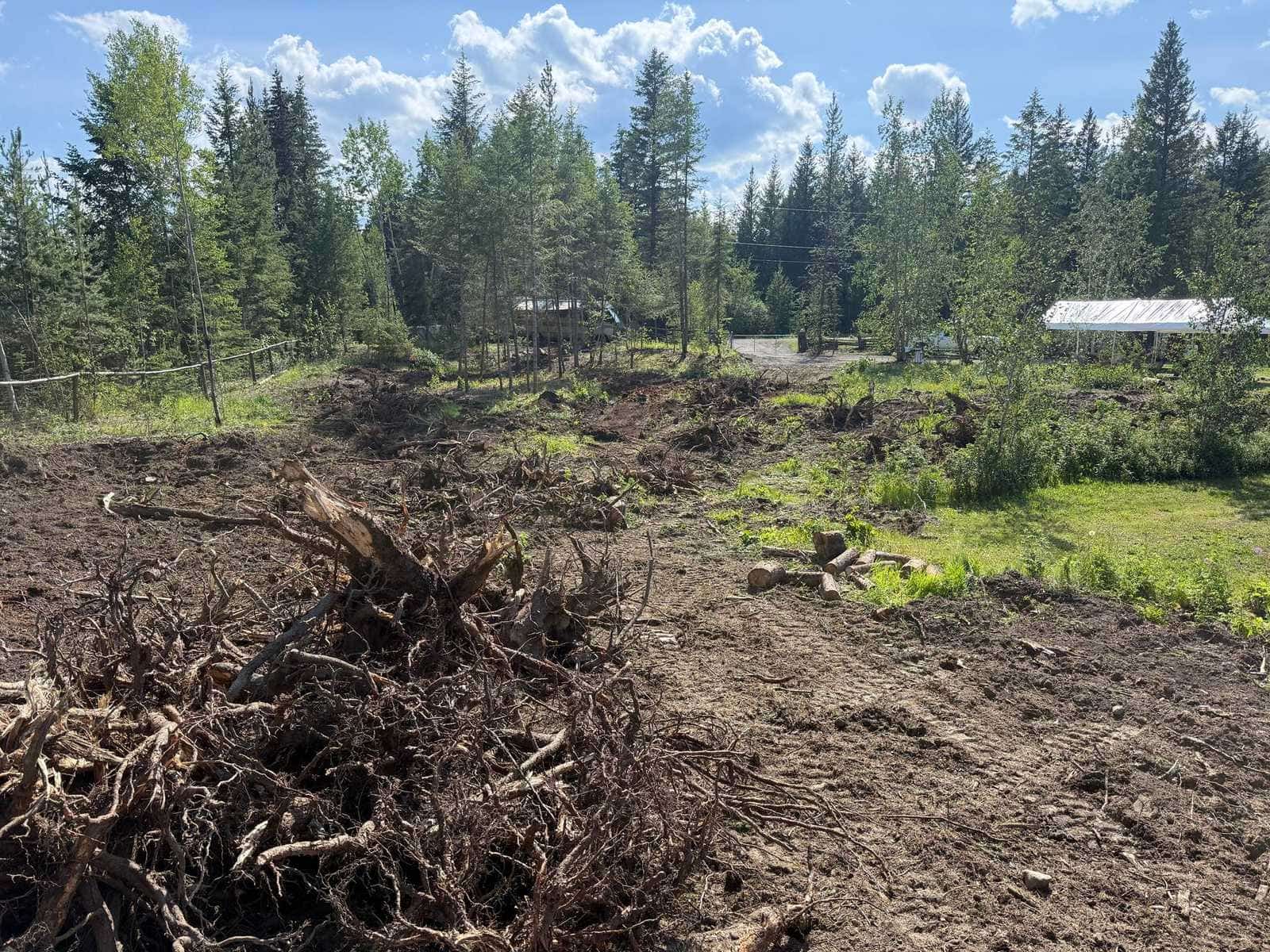
Fuel management is removing what lets a ground fire climb and spread: ladder fuels, thick understory, dead and downed wood. Machines do this well. A stand gets thinned, spaced and cleaned up in a fraction of the time hand crews need, and the finished ground is easier to defend.
The dry-belt fir and pine around 100 Mile House has been loading up with fuel for decades. We thin it selectively.
We believe in selective thinning done right: take the right stems, leave a healthier forest standing. Land we work should look better in fifty years, not worse.
We work to FireSmart standards around structures and infrastructure, and we build to prescription on funded wildfire risk reduction projects, with the documentation funded work requires. Debris gets piled, burned when regulations allow, or processed on site. It doesn't get left.
We also deliver commercial land clearing across the Cariboo — right-of-way, development and site preparation clearing.
During fire season — equipment support and response
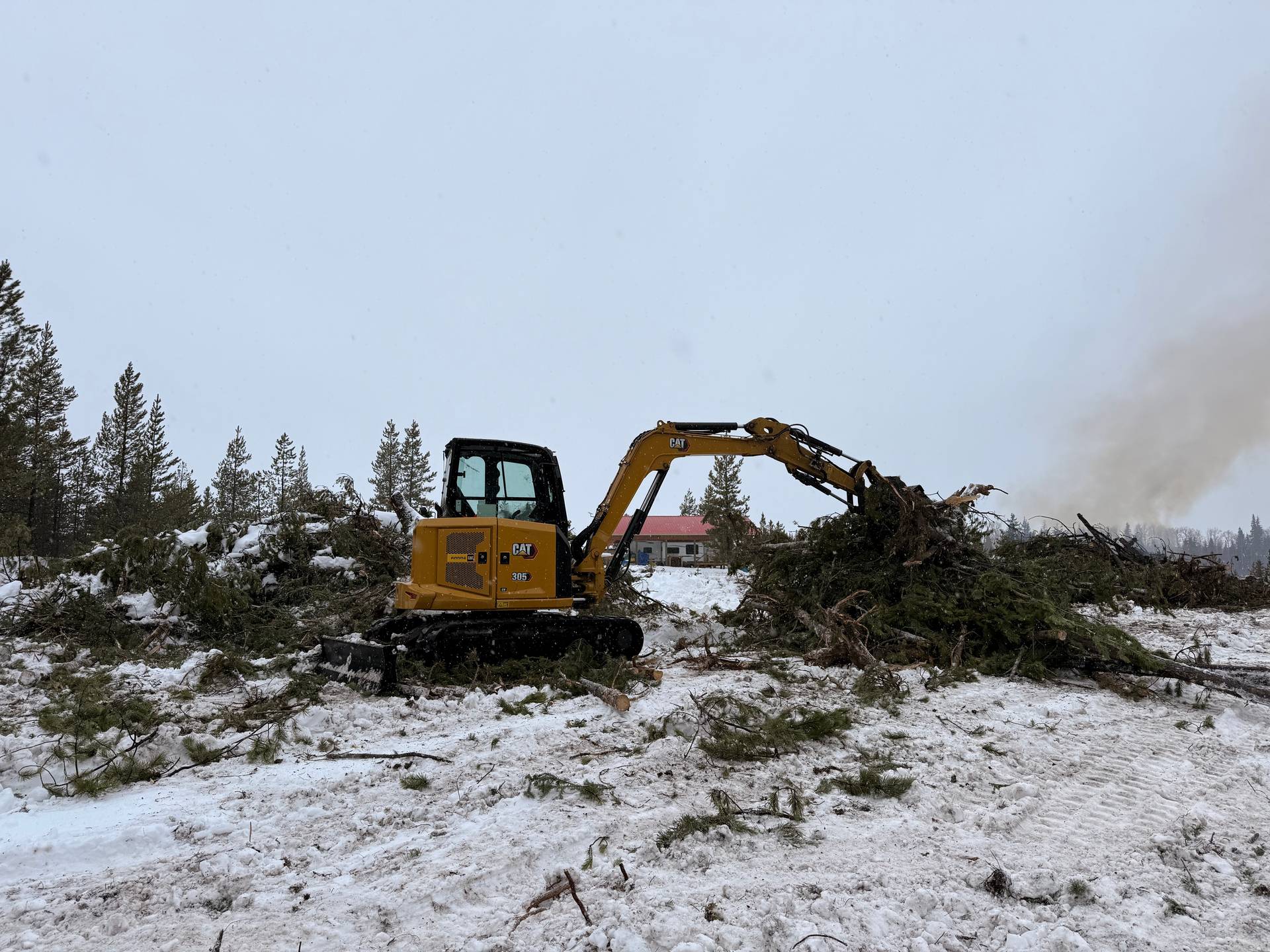
When fire is on the landscape, the work is guard, water, and access. We build fireguard — dozers and feller bunchers sized to the ground, run under our contract, with S-100/S-185 crews. Our guarded, Ansul-equipped iron carries staging and access, debris, mop-up support, and danger tree work along control lines — with machines, where the ground allows.
Before and during the season we build fire suppression reservoirs and handle pond and drafting-site work. Equipment in our classes is in the BC Wildfire Service hire rate schedule and gets hired every summer.
After the fire — cleanup and land rehabilitation
Once a fire is out, two kinds of work start. The land needs cleanup: burnt timber down and dealt with, danger trees handled, drainage put right before spring melt. And the suppression effort leaves its own footprint. Guard gets pulled back and recontoured, water bars and cross ditches go in, stream crossings get restored, exposed soil gets stabilized and prepared for seeding. The province calls that suppression rehabilitation — work we deliver: excavator and support-machine work, start to finish.
We take on that work at acreage scale across the Cariboo-Chilcotin: burnt-timber cleanup, danger tree access, erosion control, drainage restoration, debris processing, and fibre recovery support where a utilization program exists.
If it's your own place that burned, start here:
Wildfire recovery for landownersStandards and documentation
The paperwork buyers ask for is ready to send.
- WorkSafeBC registered and in good standing
- SECOR-compliant Safety Management System — site-specific plans, daily FLHAs, pre-use inspections, emergency response planning
- Every crew member holds S-100 and S-185
- Ground Disturbance Level II
- $5M aggregate commercial general liability through Northbridge
- Documentation available on request for prime contractor and proponent onboarding
Who we work with
Local governments and FireSmart coordinators
Local governments and regional districts run community wildfire protection work: CWPP priorities, FireSmart programs, CRI-funded treatments. We deliver the machine work and keep the records public money requires.
First Nations forestry organizations
First Nations organizations are leading much of the wildfire risk reduction and fibre recovery work in this region. We work as the machine contractor on that kind of project, on the Nation's terms, to the Nation's prescription.
Consulting foresters and project proponents
If you hold a prescription and funding, you need a contractor who reads treatment units and retention targets without hand-holding, shows up with the right iron, and hands back clean documentation. That's what we're set up for.
Community forests and licensees
Community forests and licensees carry wildfire risk reduction obligations across working forest. We deliver the equipment work: thinning, fuel breaks, debris work and road access.
Large private landholders
And if you own the land yourself — ranch, resort, woodlot, private forest — the fuel doesn't care about the property line. Same risks as the Crown land next door, and after a fire, same hazards. Start with wildfire recovery for landowners — danger trees, salvage, erosion, and what to do first.
Wildfire work — straight answers
What is mechanical fuel treatment?
Using machines to take out the fuel that carries wildfire: thick understory, ladder fuels, dead and downed wood. You keep the forest and lose the fuel. Machines cover ground much faster than hand crews, which matters when a prescription covers hundreds of hectares. Steep or sensitive ground still belongs to hand crews.
What does a FireSmart-standard treatment involve?
Vegetation work in zones moving outward from whatever you're protecting. Ladder fuels come out, crowns get spaced apart, surface debris gets cleaned up. The standards come from the national FireSmart program. The work itself is thinning, pruning, spacing and disposal, done to those specs.
Can you work on burnt ground?
Yes. It has its own hazards: standing dead timber, root holes and ash pits, soils that don't behave like they used to. We run forestry-guarded machines and every crew member holds S-100 and S-185. We plan for the hazards before we start, and the plan is written down.
How is debris handled — burn, mulch or haul?
Depends on the site. Piling and burning is cheapest where the season and venting rules allow it. Processing on site avoids smoke and puts material back on the ground. Hauling for fibre recovery makes sense when volumes and access justify it, and funding programs for fibre utilization exist in this region. Most jobs use a mix.
Are you set up for funded projects, with the insurance and documentation that programs require?
Yes. $5M aggregate commercial general liability through Northbridge, WorkSafeBC registered and in good standing, and a SECOR-compliant safety management system with daily FLHAs, inspections and incident reporting. Onboarding documentation goes out on request.
How do site assessments work?
We walk the ground with you, or with your prescription. Access, terrain, stand condition, hazards, water. Then you get a written estimate with a defined scope. Enquiries get answered within one business day.
Request a site assessment
- 1.Tell us about the ground — five minutes.
- 2.We walk it with you and talk through what's urgent, what can wait, and rough numbers.
- 3.You get a written estimate with a defined scope. If we're not the right fit, we'll say so and point you at who is.
Call or text 250-329-7356 to speak directly with the owner. Or send the project through the form and we'll respond within one business day.
WorkSafeBC registered · $5M CGL · SECOR-compliant SMS · S-100/S-185 crews