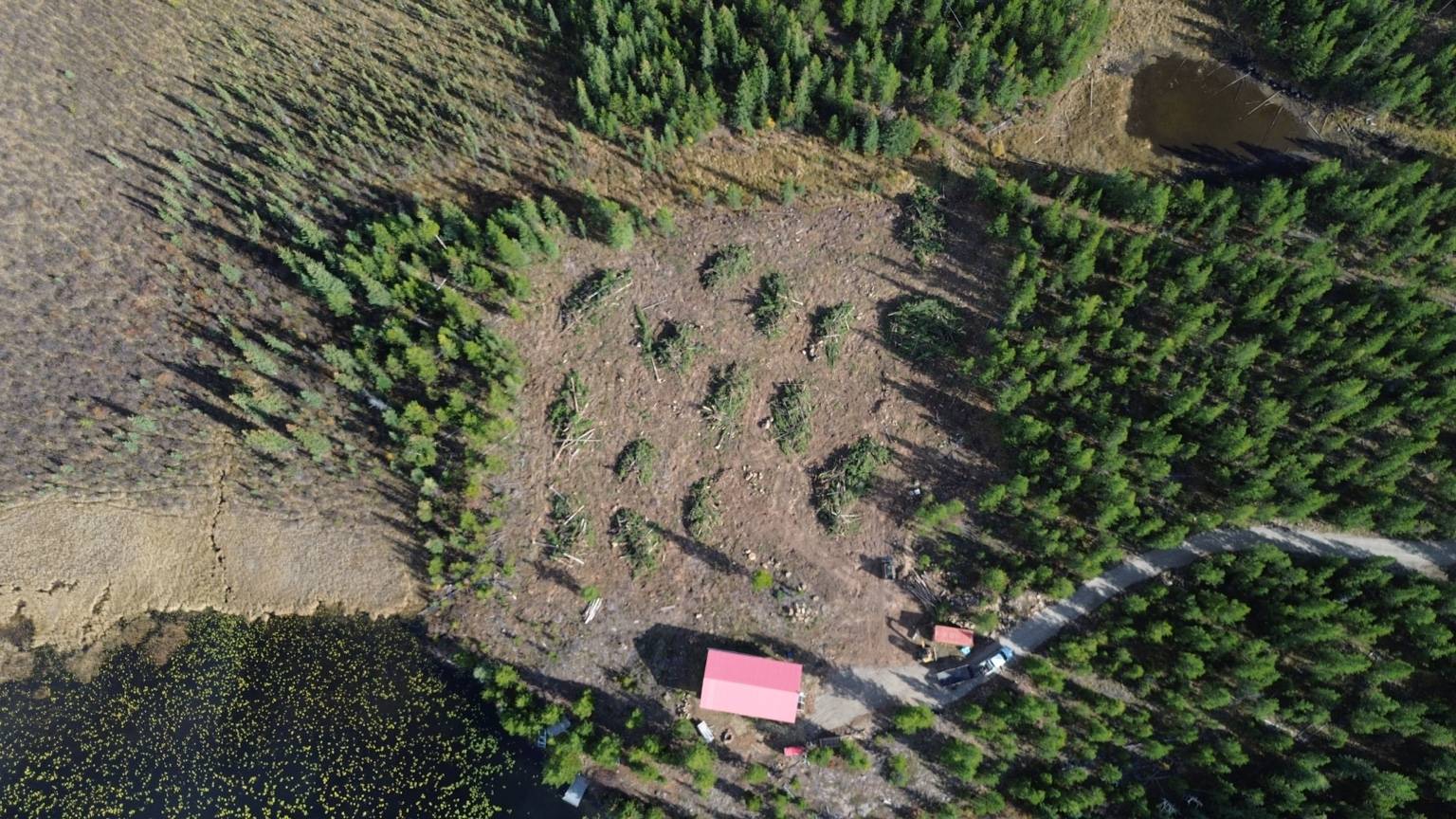
Full-acreage clearing for building sites, agricultural conversion, and subdivision prep — or selective clearing around timber and features worth keeping. Your call, your property, your plan.
Every clearing job starts with a walkthrough. We look at what's coming down, what's staying, where the access is, and where the material goes. Some jobs are full grub-and-strip — take everything down to mineral soil. Others are selective, working around mature timber, creek setbacks, or features the owner wants to keep.
We handle the full scope: tree falling, stump removal, root grubbing, slash management, and site cleanup. Slash gets piled for burning or loaded out depending on the site and the regulations. Stumps come out with the CAT 305 using the hydraulic thumb — we sort, pile, and stage material so the site is ready for the next phase.
The CAT 289D High-Flotation Track Loader handles brush mulching, material spreading, and site cleanup. Low ground pressure means we can work soft ground without tearing it up — useful in spring or on wet sites where a heavier machine would make a mess.
We leave the site the way the next trade needs it. If it's a building pad, we clear to grade. If it's agricultural conversion, we strip and stockpile topsoil for redistribution. If it's a subdivision, we clear to the lot lines and protect what's on the other side of the tape.
Clear the footprint for a new home, shop, or outbuilding. We take it down to grade and leave a clean pad for the builder.
Turn timbered land into usable pasture or crop land. Full clearing, stump removal, and topsoil redistribution.
Lot-by-lot clearing for rural subdivisions. We work to lot lines and protect retained timber and setback zones.
Clearing the buffer zone between structures and forest. Reduces fire risk and creates defensible space for property protection.
Cut a path for a new driveway, utility corridor, or resource road. We clear the right-of-way and stage material off-site.
We clear land across the Cariboo Region for residential clients — 100 Mile House, Williams Lake, Lac la Hache, and Kamloops. For commercial and civil contracts, we mobilize anywhere in BC.
It depends on where you are. Inside a municipality you usually need a development permit. In the regional district it depends on the zoning and whether you're in the ALR. If there are watercourses on the property there may be environmental restrictions. We always recommend checking with your local government before clearing starts — we can help you figure out who to call.
A typical 1 acre residential lot with moderate timber and brush takes 1-3 days depending on terrain, tree size, and what's being done with the material. Steep ground or heavy old growth takes longer. We'll give you a realistic timeline after a site visit.
Merchantable timber can be decked for the landowner to sell or use. Brush and non-merchantable material is typically piled for burning, chipped on site, or hauled to an approved disposal site depending on local burning regulations and your preference.
Yes, and sometimes it's actually better. Frozen ground supports equipment without rutting, and there's less impact on the soil. Winter clearing works well for soft or wet ground that would be torn up in spring or summer.
Clearing removes the trees, brush, and vegetation above ground. Grubbing goes further and removes the stumps and root systems below grade. Most building sites need both — clearing for access and grubbing where the foundation or driveway will go.